Our Science
Genase Therapeutics develops a potent and selective orally bioavailable small molecule inhibitor of dihydroorotate dehydrogenase (DHODH), a critical enzyme in the de novo pyrimidine biosynthesis. Multiple independent genetic and phenotypic screens in cancers addicted to cell growth-inducing oncogenes have consistently identified DHODH as a therapeutic vulnerability in colon cancer and other cancers, particularly the KRAS/MYC driven subset*.
This metabolic vulnerability has been demonstrated in both solid and hematological malignancies driven by oncogenes such as MYC, KRAS and BRAF. Building on the initial discovery of novel DHODH inhibitors by prof. Sonia Lain and colleagues of the Karolinska Institute, Genase Therapeutics develops its candidate drug GTX-196 as a monotherapy in colorectal cancer and other cancers, where patients are stratified by certain biomarkers.
About 1.2 million patients each year receive treatment with the pyrimidine analog, 5-fluorouracil, in the 7 major markets (US, Japan, United Kingdom, Spain, Italy, Germany and France). Despite its efficacy, 5-FU causes severe, broad-spectrum toxicity in about a third of patients leading to hospitalization and deaths in 10% and 1-2% of patients respectively. About half of severe toxicity is caused by a deficiency in the liver enzyme DPD, which catabolizes >80% of 5-FU. Up to 15% of humans have a degree of DPD deficiency and DPD testing is therefore strongly recommended by the regulators. Howeever, there is insufficient data to recommend the right dose for each genotype, leading to under- and overdosing of patients.
GTX-196 retains efficacy while avoiding systemic toxicity by targeting the same validated pathway as 5-FU without DNA/RNA incorporation and DPD-related toxicity. Moreover, tumor selectivity is enhanced by targeting the cancer-preffered DHODH-dependent pyrimidine biosynthesis route.
Tumors heavily rely on do novo pyrimidine synthesis
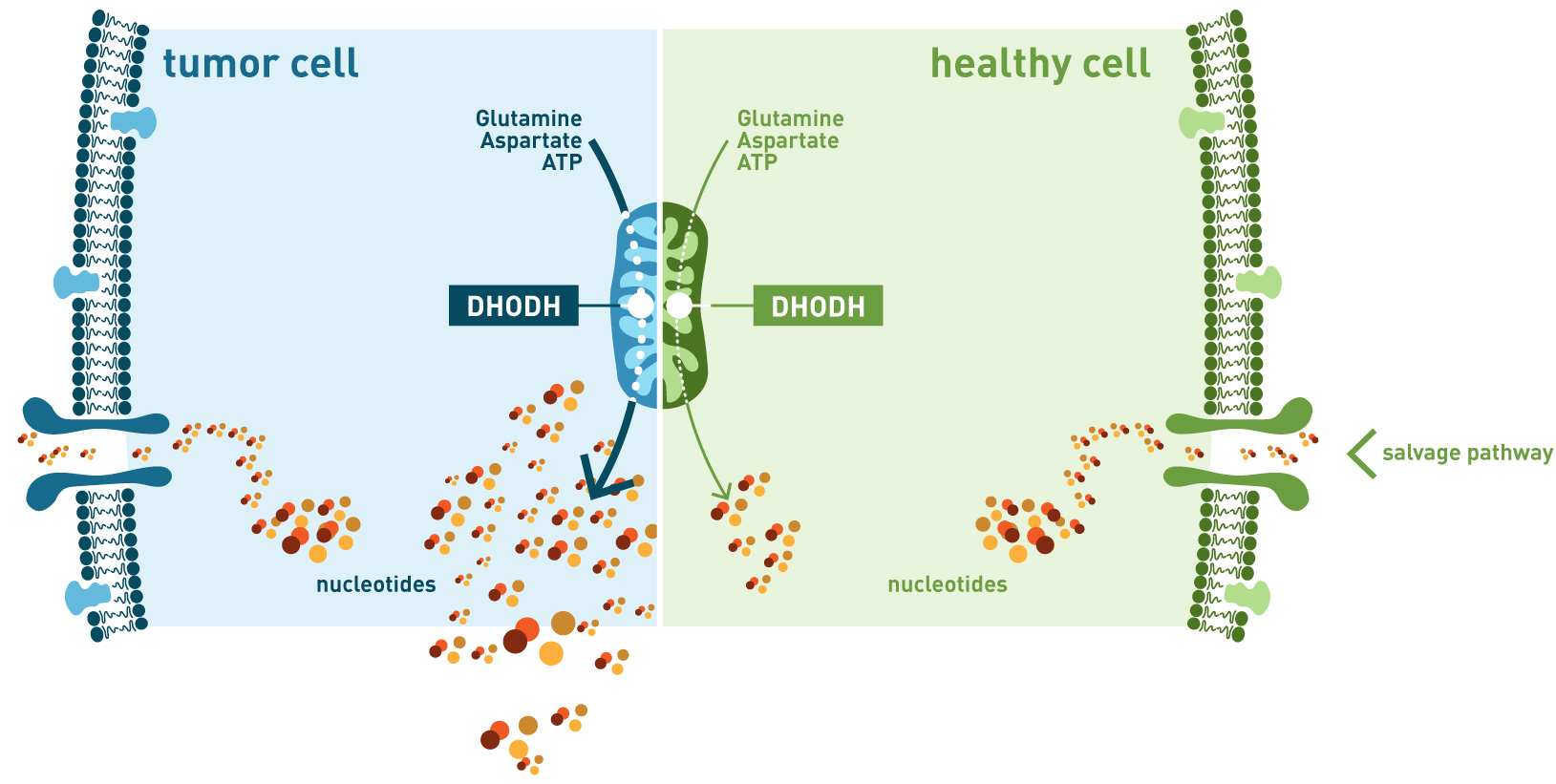
Tumor cells heavily rely on the energy-demanding de novo pyrimidine biosynthesis to replenish their nucleotides, while for healthy normal cells the energy-conserving pyrimidine salvage pathway (recycling of nucleotide intermediates) is sufficient when the de novo pyrimidine biosynthesis is blocked.
Oncogene addicted tumors rely on de novo pyrimidine synthesis: Key role for DHODH
Oncogenes such like MYC, RAS and BRAF provide powerful mitogenic signals that create a dependency on DHODH to sustain cancer cell growth.